


Mental health expert warns of ‘crucial moment’ as UK mulls social media ban for under-16s
AUSTRALIA’S landmark move to ban under-16s from social media has prompted one of Scotland’s leading child psychotherapists to renew calls for urgent debate in the UK - as the Government launches its own consultation into online safety.
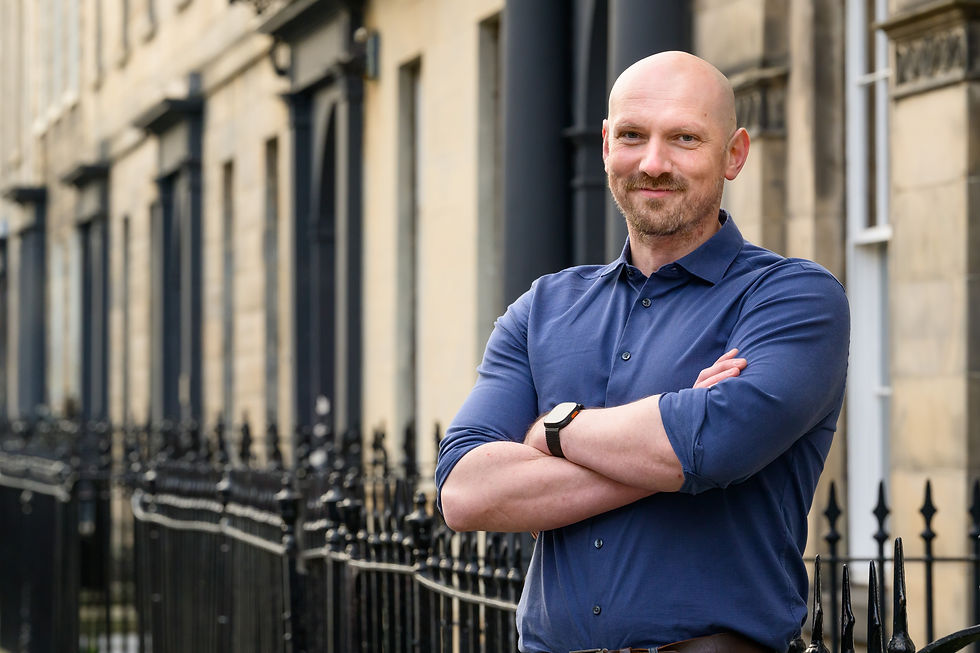
Paul Bell, Clinical Director and Consultant Child and Adolescent Psychotherapist at The Anchor Practice, said the UK must now use the consultation to ask difficult questions about how young people’s mental health is being affected by social media platforms - and whether enough is being done to protect them.
He said: “This consultation marks a pivotal moment in how the UK responds to the escalating concerns around children’s digital wellbeing. What we are seeing, both in the clinic and across research, is a generation under significant psychological pressure from environments that were never designed with their development in mind.
“Social media platforms are not neutral tools - they are psychologically engineered ecosystems, designed to capitalise on the vulnerabilities of the developing adolescent brain. Their primary goal is prolonged engagement - often at the expense of a child’s mental health.
The UK Government launched its consultation on 25 January 2026, proposing new measures to improve children's relationship with mobile phones and social media. This includes exploring the feasibility of banning under-16s from social media altogether, following the example of Australia, where the Senate passed a similar measure.
A growing body of evidence shows that teenagers are particularly susceptible to the pressures of social media, with studies linking excessive use to increased rates of depression, anxiety and poor sleep hygiene. Paul believes adolescence is a uniquely vulnerable period due to the rate and scale of neurodevelopment, and heightened sensitivity to social comparison during this developmental phase.
He added: “Teenagers are naturally drawn to peer interaction - that’s part of healthy development. But when that drive is exploited through constant social validation mechanisms like ‘likes’ and ‘streaks’, it becomes a mental health risk.
“We're not just talking about distraction or time wasting - we are dealing with systems that can seriously distort a young person’s sense of identity, self-worth and social reality. These harms are now widely recognised by frontline professionals across education, health and social care.”
He also warned that despite the rising awareness; the business model of social media platforms remains at odds with the wellbeing of young users.
“Let’s be honest: keeping young people online benefits shareholders more than it benefits families. There’s an inherent conflict of interest when platforms rely on constant engagement from under-18s to drive advertising revenues. That’s why regulation must look beyond surface fixes or blanket bans and address these fundamentally exploitative design practices.”
While welcoming the consultation, Paul is calling for it to be shaped by meaningful engagement with mental health professionals, schools, parents and young people themselves. He warns that the debate risks becoming increasingly binary - in a way that is not necessarily helpful.
He said: “Those not in favour of a ban can be painted as not committed enough to safeguarding young people when in fact what they are calling for is robust and targeted action and stronger implementation of recent legislation.
“The debate is also becoming increasingly politicised - while this may have the benefit of bringing the issue to the fore, as we have seen in recent weeks, we need to remain committed to keeping the long-term safety of our children at the core of this issue.
“The questions this debate raises apply not only to children and young people, but to all users of the online world. We know our children look to adults around them to learn how to engage with the world - and the digital world is increasingly part of this.
“Our children are watching as we engage with our devices and we would be naive to think they don’t see the good, the bad and the ugly of our relationship to the online world.”
Looking ahead, Paul hopes the UK’s consultation leads to concrete action rooted in high-quality research rather than political positioning.
“While legislation must take into account young people’s autonomy and specific needs, it is a good point in the evolution of legislation around this issue for us to consider: what place - and what powers - do we really want to give social media in our children’s - and our own - futures.
“The online landscape is complex and we cannot ignore that for some young people, and adults, the online world can bring support, information and a sense of belonging that may feel absent in their physical networks.
However, the potential harms must be taken seriously, and it is for this reason that holding social media companies accountable for business practices that include promoting harmful content and driving excessive engagement must be at the forefront of any legislation.”
With policy currently under review and the public invited to respond to the UK Government’s proposals, Paul and his team at The Anchor Practice will continue monitoring developments closely.
He added: “We’ll be looking particularly at the evidence gathered through this consultation, and at how Australia’s approach plays out. Done right, this could be a turning point. But the stakes, and the costs of inaction, could not be higher.”


